 Paver Calculator.ORG
What changes for a driveway
| Patio or walk | Driveway | |
|---|---|---|
| Paver thickness | 2⅜ in (60 mm) | 3⅛ in (80 mm) |
| Compacted base | 4–6 in | 6–8 in, 8–12 in on poor soil |
| Bedding sand | 1 in | 1 in |
| Pattern | any | herringbone 45° or 90° |
| Edge restraint | plastic or metal, spiked | concrete edge, curb, or restraint rated for vehicles |
| Excavation below finished surface | about 7½–9½ in | about 10–16 in |
The sand layer stays at 1 in. A thicker sand bed under a driveway ruts where the tires run.
Worked example: a 12 × 40 ft single driveway
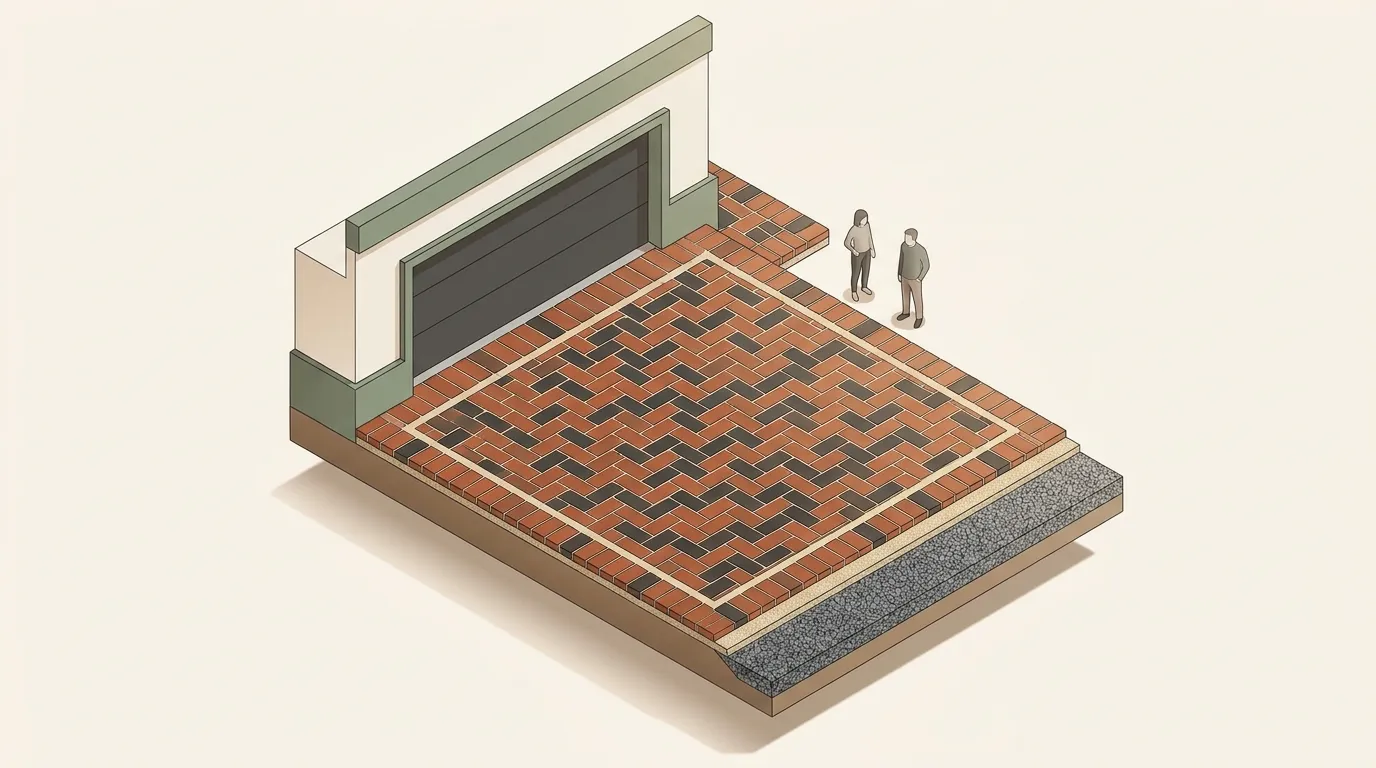
4 × 8 in pavers, 3⅛ in thick, in 45° herringbone, on firm soil. One end meets the garage slab and the other the street apron.
| Line | Working | Result |
|---|---|---|
| Area | 40 × 12 | 480 sq ft |
| Pavers | 480 × 1.15 = 552 sq ft × 4.5 | 2,484 pavers |
| Base, 6 in | (40 + 1) × (12 + 1) × 6 ÷ 12 × 1.2 ÷ 27 | 11.8 cu yd, about 17.8 tons |
| Base, 8 in (clay or frost) | same footprint × 8 in | 15.8 cu yd, about 23.7 tons |
| Bedding sand | 480 ÷ 12 × 1.1 ÷ 27 | 1.63 cu yd, about 2.2 tons |
| Polymeric sand | ⅛ in joints, 3 in deep | 12–16 bags of 50 lb |
| Edge restraint | 2 × (40 + 12) − 12 − 12 | 80 ft |
| Paver weight | 552 sq ft × about 36.5 lb | about 10 tons |
A double driveway 20 × 40 ft in 6 × 9 in pavers on an 8 in base comes to about 2,454 pavers, 25.5 cu yd of base (about 38 tons) and 2.7 cu yd of sand. That is a lot of stone. Base is usually delivered by the truckload, so ask your supplier how many loads your order comes to.
Base depth and soil
The base under a driveway does almost all the work. Tires press down and twist; the base spreads that load so the soil underneath doesn’t deform.
- Firm, well-drained soil (sand, gravel): about 6 in compacted, 8 in for heavier vehicles.
- Clay, silt or soft ground: 8 to 12 in, usually with geotextile fabric between soil and base.
- Cold climates: deeper bases help where frost heave is common. Local practice is the best guide; ask a local paver supplier what depth they see used.
Compact the base in lifts of 2 to 3 in with a heavy plate compactor or roller. The paver base calculator covers base materials and coverage.
Pattern and paver choice
Herringbone is the standard driveway pattern because each paver is held by its neighbors in two directions. 45° herringbone puts the zigzag across the direction of travel; 90° herringbone uses fewer cuts. Running bond can work if the long side of the pavers runs across the direction of travel, but it interlocks less. Basketweave is best kept to patios. See paver patterns.
Choose a paver sold for vehicular use. The maker’s spec sheet will say so and give the thickness.
Edges and the apron
Driveway edges take side loads from tires turning onto them. Plastic edge restraint must be spiked closely and sit on the base; many installers prefer a concrete edge or a soldier course set in concrete for driveways. Where the driveway meets the street, local rules often control the apron (the part in the public right of way), so check with your town before you dig. The edge restraint calculator covers spikes and spacing.
Permeable paver driveways
Permeable pavers have wider joints filled with small chip stone, and they sit on layers of clean, open-graded stone that store rainwater and let it soak in. The quantities work differently from a standard driveway: no bedding sand (a layer of small chip stone instead), no polymeric sand, deeper excavation, and several sizes of washed stone instead of dense-graded base. Some towns give stormwater credits for them. Follow the paver maker’s cross-section for your soil; this calculator’s base and sand lines assume a standard, non-permeable build.
Driveway paving cost: how to estimate it
The price fields in the calculator let you build a driveway estimate from your own quotes. The main things that move the cost of a paver driveway:
- Excavation and haul-away. A driveway needs a lot of digging, and removing an old asphalt or concrete driveway adds tear-out and disposal.
- Base depth. Doubling the base from 6 to 12 in roughly doubles the stone and the compaction time.
- Paver choice. 80 mm vehicular pavers cost more per square foot than patio pavers; clay and permeable pavers usually more again.
- Pattern and borders. Herringbone at 45° and curved edges mean more cutting.
- Access and delivery. Pallets and truckloads of base need somewhere to land.
When comparing pavers with asphalt or poured concrete, compare the same scope: the same base, edges, drainage and removal of the old surface. The paver patio cost calculator has a line-by-line worksheet for reading quotes.
Driveway quantities are big enough that small errors matter. Check base depth with a local supplier or installer, and use the weight per cubic yard your supplier quotes when ordering by the ton.
Questions people ask
- How much base do I need for a paver driveway?
- About 6 to 8 in of compacted crushed base on firm, well-drained soil and 8 to 12 in on clay, soft ground or where frost goes deep. A 12 x 40 ft driveway with a 6 in base and 6 in past the edges needs about 11.8 cubic yards, roughly 18 tons.
- How thick should driveway pavers be?
- Use pavers made for vehicles, usually 3 1/8 in (80 mm) thick. Standard 2 3/8 in patio pavers can crack or shift under cars.
- What is the best paver pattern for a driveway?
- Herringbone at 45 or 90 degrees. It interlocks in both directions and resists the turning and braking forces from tires better than running bond or basketweave.
- How many pavers do I need for a driveway?
- Square feet x 1.15 for a 45 degree herringbone x pavers per square foot. A 12 x 40 ft driveway in 4 x 8 in pavers needs about 2,484.
- How do I estimate the cost of a paver driveway?
- Get local prices for the pavers, base and sand by the ton, polymeric sand by the bag, edging by the foot and labor by the square foot, then enter them in the calculator. Excavation depth, removal of an old driveway, and access for trucks are often the biggest variables.