 Paver Calculator.ORG
The four classic patterns
Each square below is the same 80 × 80 in patio laid with 4 × 8 in pavers. Whole pavers are dark; pavers that cross the edge and have to be cut are pale.
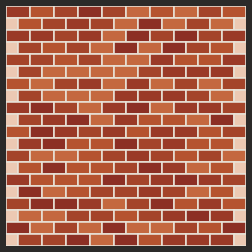
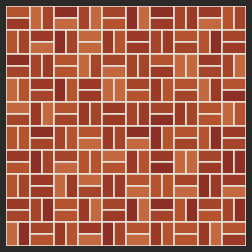
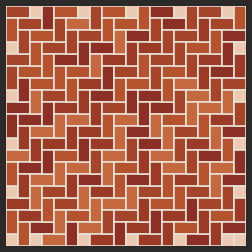
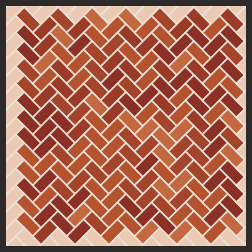
The counts come straight from the drawings: the 45° herringbone square needs 87 cut pieces against 20 for running bond. Each cut leaves an offcut that usually can’t be reused, which is why the angled patterns need more extra. The basketweave square happens to be an exact multiple of its 8 in block; on a real patio that rarely works out, so plan on 5 to 10%.
Extra to order by pattern
| Pattern | Extra for cuts | Interlock | Good for |
|---|---|---|---|
| Stack bond (straight grid) | about 5% | Low | Large slabs, modern patios |
| Running bond | about 5% | Medium | Walkways, patios, a quick DIY lay |
| Basketweave | about 5–10% | Low to medium | Patios, traditional brick look |
| Herringbone 90° | about 10% | High | Patios and driveways |
| Herringbone 45° | about 10–15% | High | Driveways, a patio that looks bigger |
| Random multi-size patterns | about 5–10% | Medium to high | Patios with a natural-stone look |
Add another 5% or so for curves, circles, lots of corners, or obstacles such as drains and posts. A mostly straight-sided patio in running bond can get by on 5%; a curving walkway in 45° herringbone can use 15–20%.
Running bond
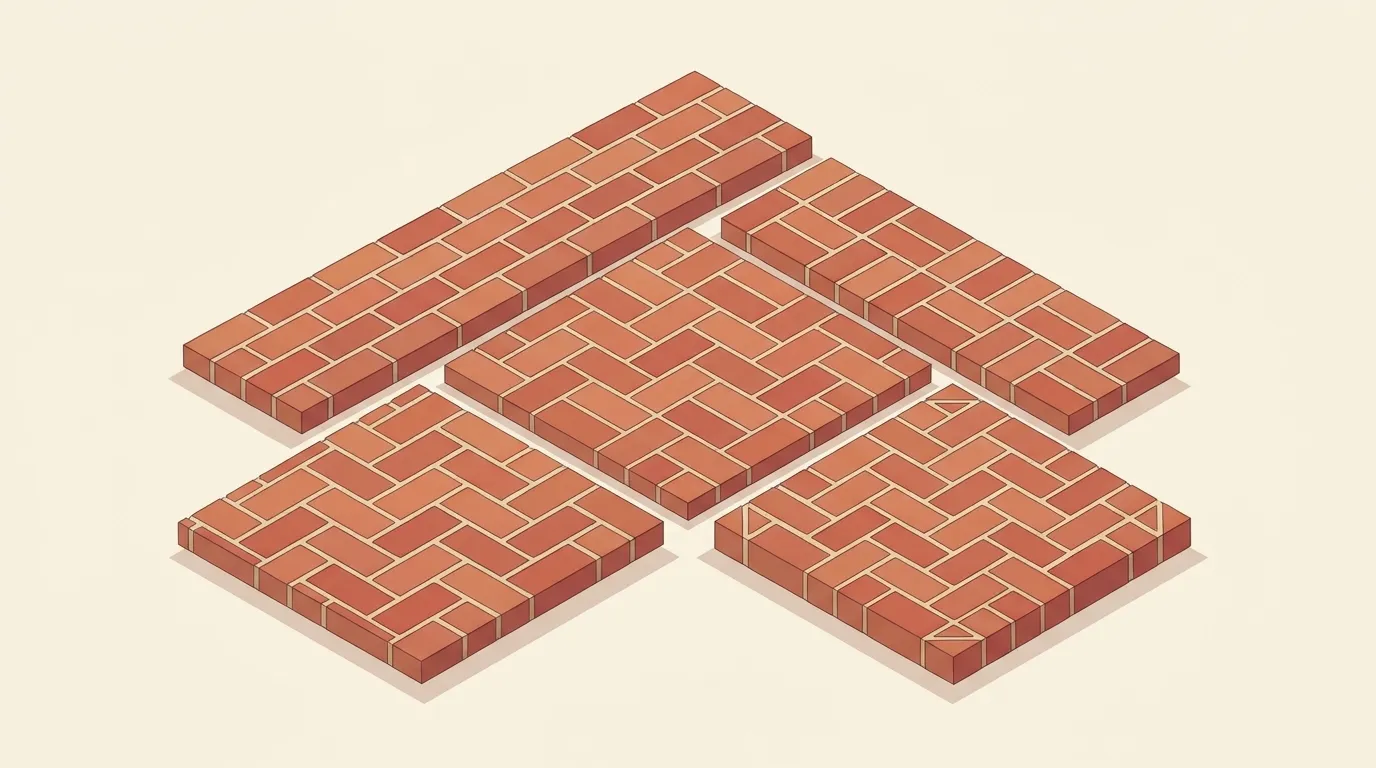
Rows of pavers with each row shifted by half a paver, like a brick wall. It is the quickest pattern to lay and the least fussy to cut: half pavers go at the end of every other row. On a walkway, run the long side of the pavers across the path; the rows then look wider and the pavers resist creeping toward the low end.
Basketweave
Pairs of pavers set side by side, alternating between horizontal and vertical. It suits square-ended patios with a traditional brick feel. The joints line up in long straight runs in both directions, so it interlocks less than herringbone and is usually kept to foot traffic. A variation, the half basketweave, combines a pair of pavers with a single crosswise one.
Herringbone 90°
Each paver is set at a right angle to the one before it, forming a zigzag whose rows run parallel to the patio edges. Because each paver is held by neighbors in two directions, herringbone has the best interlock of the common patterns and is the usual choice where cars drive. Starting a 90° herringbone along a straight edge keeps cutting down to the far edges.
Herringbone 45°
The same zigzag turned 45° to the edges. It looks dynamic and is often used on driveways because the zigzag sits across the direction of travel. The trade-off is cutting: almost every paver along every edge gets a diagonal cut. A soldier-course border around the edge gives the cuts something clean to butt against.
Borders
A border of pavers around the edge (a soldier or sailor course) frames the pattern and makes the cut edge look tidy. It also gives the edge restraint a straight line to hold. Count border pavers separately; see the border example in how many pavers do I need.
Which pattern for which project
- Walkways: running bond across the path, or 90° herringbone. See the paver walkway calculator.
- Patios: any pattern. Basketweave and running bond keep cutting down; herringbone is the strongest.
- Driveways: herringbone, 45° or 90°, on thicker pavers. See the paver driveway calculator.
- Brick-look patios: basketweave or herringbone with 4 × 8 in pavers. See the brick paver calculator.
Pick a pattern in the calculator above and it fills in the usual extra for that pattern. You can still type your own figure.
Questions people ask
- What is the strongest paver pattern?
- Herringbone, at 90 or 45 degrees. Every paver is locked by its neighbors in two directions, so it resists the twisting and sliding from car tires best. It is the usual choice for driveways.
- How much extra do I need for a herringbone pattern?
- About 10 percent for 90 degree herringbone and 10 to 15 percent for 45 degree herringbone, which has a diagonal cut at nearly every edge paver. Add more for curves.
- What is the easiest paver pattern to lay?
- Running bond or a straight stack bond. Rows run straight across, cuts only fall at the row ends, and about 5 percent extra is enough.
- What is the difference between herringbone and basketweave?
- Basketweave sets pavers in pairs that alternate direction, like a woven checkerboard, so joints line up in long straight lines. Herringbone sets each paver at a right angle to the next in a zigzag, which breaks up the joints and interlocks better.
- Which way should running bond pavers run?
- On walkways and driveways, lay the long side of the pavers across the direction people or cars travel. It looks wider and resists creeping better than rows running the same way as the traffic.